Hebrews 11:3 Through faith we understand that the worlds were framed by the word of God, so that things which are seen were not made of things which do appear.
As I take my daily walks I look around and marvel at all the wonders around me. I am amazed at how the plants spring forth from the bare ground into beautiful flowering plants, or how the bare tree limbs shoot forth their buds and then into leaves with the changing of the seasons. Like David stated Psalms 8:3,4a “When I consider thy heavens, the work of thy fingers, the moon and the stars, which thou hast ordained; what is man, that thou are mindful of him?” I also have the same question when I realized that the God of this entire universe cares for even a small part of His creation such as me.
Here in Hebrews 11:3 I realized that knowing Jesus as my Savior I have a better understanding of the world around me. Instead of trying to explain how this world was created I just enjoy the peace that I have deep in my heart by knowing the one personally who framed the world around me. Christ gave us the example of the lilies in Luke chapter twelve of how great his power is in this world. As they grow, they toil not, they spin not and yet that even Solomon in all his glory was not arrayed like one of them. So, as I look around at this creation the answer of how it can into being is simple; God spoke, and it happened.
Ecclesiastes 12:12-14 And further by these, my son, be admonished: of making many books there is no end; and much study is a weariness of the flesh. Let us hear the conclusion of the whole matter: Fear God and keep his commandments: for this is the whole duty of man. For God shall bring every work into judgement, with every secret thing, whether it be good or whether it be evil.
Solomon started his writing of the book of Ecclesiastes with the purpose of giving his whole heart to seek out by wisdom concerning all things that are done under heaven. I have a note in my Bible as a starting point to study the book of Ecclesiastes that reads: “As you study Ecclesiastes remember David was a man after God’s own heart, he wanted to know God. Solomon focus on himself to try to understand the workings of all things done under heaven.” Solomon saw God as the judge of the world, but to David God was his shepherd, his redeemer, the one that looked after him an guide his paths. So, as you study the scriptures are you looking to gain an understanding of all things that are done under heaven, or like David who’s desire was to be a man after God’s own heart. Paul’s words in Philippians 3:10 “That I may know him, and the power of his resurrection, and the fellowship of his sufferings, being made conformable unto his death.” reflects was the same desire as David had of knowing God personally.
Psalm 1:3 And he shall be like a tree planted by the rivers of water, that bringeth forth his fruit in his season; his leaf also shall not wither; and whatsoever he doeth shall prosper.
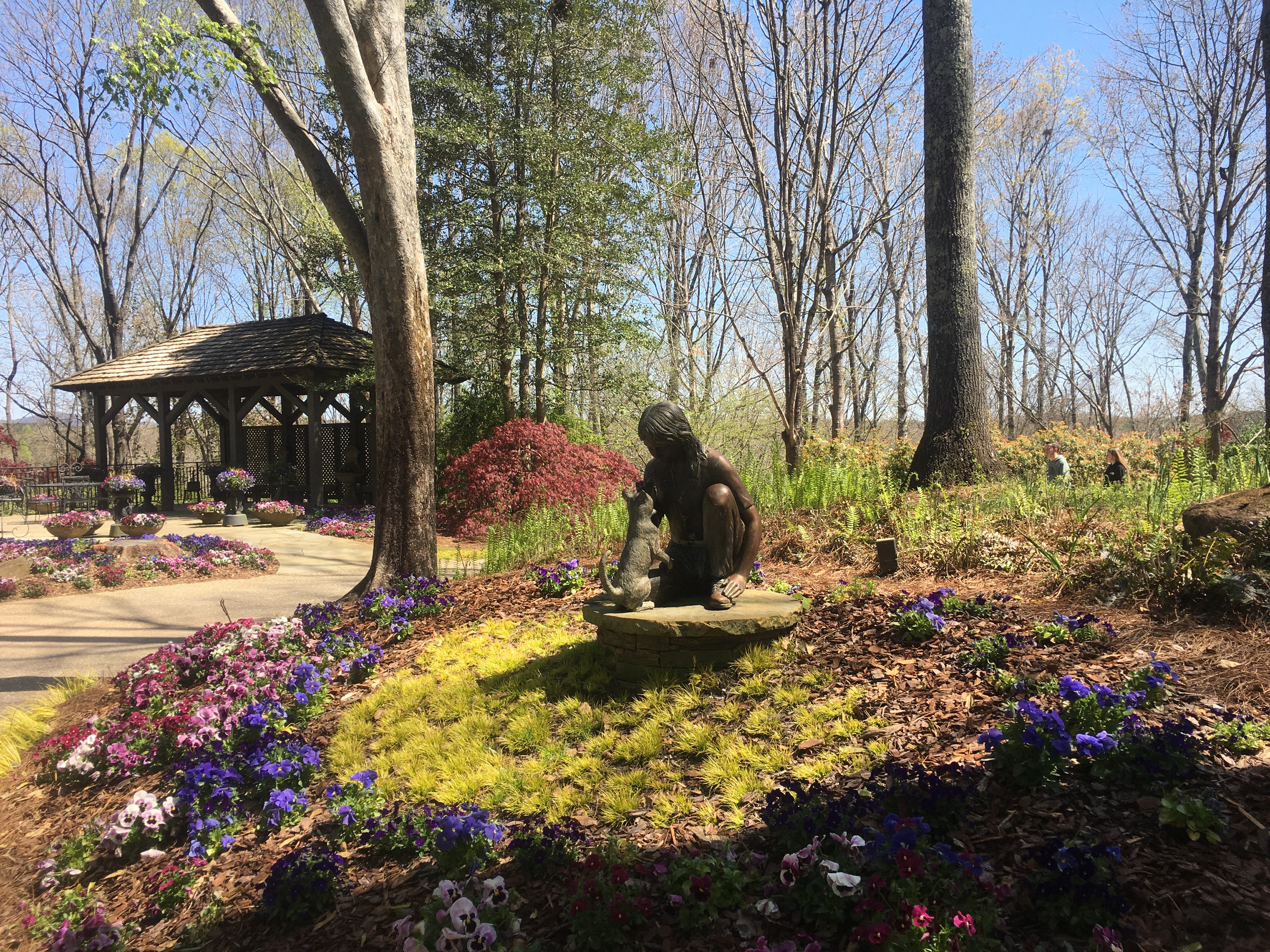
One of the pleasures I have in my golden years is my daily walk. During these walks in the early spring, I witness the beauty of nature awakening from the cold darkness of the winter to the warmth and sunshine that this time of the year brings. However, it is in the yards and gardens that the beauty of this time of the year seems to explode into color.
These yards and gardens are like the congregation of the righteous. God has planted them in the right location for sunlight and moisture. They bring forth their fruit in their season and even in times of drought their leaves do not wither. They prosper in all their endeavors. This congregation of the righteous are those that walk daily with the Lord. They understand the simple nature of living day by day in the light of His guiding Word. Their daily prayer is simple, because they realize that their heavenly Father knows what things they need before they ask Him.
Walking this journey of life is simple. We realized that His will be done both in heaven and on earth. We are to live daily, forgetting the things of the past and pressing forth to the high calling of Christ. We must also look to forgive others as we also seek forgiveness from God for our daily transgressions. We must not follow after the ways of the ungodly but stay away from anything that is ungodly. This is the secret of the Lord’s Prayer as well as verse two of this Psalm. Make your delight the law of the Lord. Meditate day and night on His word and you enjoy being the tree that is planted by the river of waters that brings forth your fruit in the season that God has planned for you.
Psalm 1:1 Blessed is the man who does not walk in the counsel of the wicked or stand in the way of sinners or sit in the seat of mockers. But his delight is in the law of the LORD, and on his law, he meditates day and night. (KJV)
Genesis 4:6,7 And the Lord said unto Cain, “Why are you angry? And why has your countenance fallen? If you do well, will you not be accepted? And if you do not do well, sin lies at the door. And its desire is for you, but you should rule over it.” (NKJV)
Matthew 7:13,14 Enter by the narrow gate: for wide is the gate and broad is the way that leads to destruction, and there are many who go in by it. Because narrow is the gate and difficult is the way that leads to life and there are few who find it. (NKJV)
David gives us two different ways in this Psalm. We can either walk in the ways of the world or we can delight in the law of the Lord. In Genesis chapter four God gave Cain the same choose and in Matthew chapter seven Christ explains the two difference ways. These ways are simple. One is the way of the Godly, which is the narrow way, and the way that is acceptable to God’ s standards (his law). The other way is the path that rejects God and his way.
The starting point however starts with John 3:16 “For God so love the world that he gave his only begotten son that whosoever believe in him shall not perish but have everlasting life.” In Revelation chapter four we are told that Christ stands at the door and knocks and whosoever hears his voice and opens this door he will come in dine with you. God has provided a way for man to know and learn about Him. The door to this knowledge is his law which is his Word (the Bible), and the key is Christ. I have been on this journey for over sixty years, and yes my life could also be read like the poem “Footprint in the Sand”; and looking back I can see God’s hand in directing my path.
The starting point is knowing Jesus as your Savior. However, it is still a narrow path. It is not an easy path. For the lust of the flesh, the lust of the eyes and the pride of life are always in our ways. Satan as well as his wicked followers gives us half-truths that sound to good to pass up which can lead us off this narrow path. However, the Bible has given us many examples (Luke 15:11-31 The parable of the Lost son) to show us the way back to God. So, as you start your journey in life remember there are only really one of two paths to choose: the Godly or the Ungodly.
Psalm 42:1 As the hart pants after the water brooks, so pants my soul after thee, O God. 2 My soul thirsts for God, for the living God: when shall I come and appear before God?
One of the sweetest times of my day is the time I devote to walking. This is my quiet time with the Lord. It is a time when I can cast off most of the noise of this world and put on my focus on God’s Word and the great hymns of faith. This is a time when I can take my prayer request to the Lord and wrestle with God on the daily issues that God has placed in my life. David describes times like these as the thirst that a hart (deer) has for a drink at the water brook. This thirst becomes the driving force for the path that the hart pursues. May God’s Word and his presence in my life be the path I pursue as I daily mediate on God’s Word.
This is the importance of hiding God’s Word in your heart. By studying and knowing God’s Word these quiet times of just reflecting on His Word and letting the Holy Spirit speak to your heart will give you the peace that passes all understanding. It is wonderful to see in times of mediation how the verses of the Bible open up and you can grasp how God is working in your life. Having the knowledge of these verses in your memory will open up a deeper relationship with God. As David states in verse two his desire of coming and appearing before God. Make your life rich and place a verse on your mind and go for a quiet walk and let the Holy Spirit open up a wonderful time of fellowship between you and God.
Psalm 51:10 Create in me a clean heart, O God; and renew a right spirit within me.
Philippians 1:21 For me to live is Christ, and to die is gain.
How must I live? Paul gives us the secret of living life as we go about our journey on this earth. For me to live is Christ. Just imagine how rich life would be by having Christ walking beside you every day. In time of uncertainties, you could just look over to Christ for the answers. David gives this type of walk in Psalms one hundred and nineteen. Each of these one hundred and seventy-six verses gives the believer the secrets of walking with the Lord and having Him create in us a clean heart. As Paul states in Philippians the purpose for the believer is to live a life that magnifies Christ in our life.
The second part of Philippians 1:21 “and to die is gain” gives the believer the joy of knowing that life after death is greater that the life we have on earth. This is the fulfillment of I Corinthians 13:12,13 “For now we see through a glass, darkly; but then face to face: now I know in part: but then shall I know even as also I am known. And now abideth faith, hope, love, these three; but the greatest of these is love.” For in death faith will become sight when we shall see our Savior face to face, and hope is fulfilled when we are in heaven and this corruptible will put on incorruption and this mortal shall put on immortality. But our love will only grow as we praise our Lord for the victory he has given us over death to live eternality with Him in heaven.
Therefore, the goal of every believer should follow Paul’s advice found in Philippians “for me to live is Christ and to die is gain.”
Galatians 1:16-18 To reveal his son in me that I might preach him among the heathen: immediately I conferred not with flesh and blood: neither went I to Jerusalem to them which were apostles before me: but I went into Arabia and returned again to Damascus. Then after three years I went up to Jerusalem to see Peter and abode with him fifteen days.
Matthew 6:11 Give us this day our daily bread
During my daily walks I will sometime use these moments as a time to let the Lord speak to me. To start this conversation, I will usually focus on a verse or a song to mediate on during his time. It is during these walks I would usually focus on the psalm I was studying for the next day devotional. However, during the last few weeks I was looking at Paul’s life as a new focus for my studies. It was during this time I came across Galatians 1:16-18. In these verses I realized that God did not reveal Jesus to him during this time, but God reveal Jesus in him. The importance of this truth revealed to me that it is not just knowing about Jesus, but it is letting Jesus into our life to become a part of us.
It was during these three years that Paul learned from the scriptures, the Old Testament, that it was Jesus who was the promised seed of the Eve, the seed of David, the promised Messiah. It was his day-by-day mediation on God’s word that reveal this truth to him. So now as I study daily the scriptures may my new goal be for God to reveal his son in me so that my daily life will reflect Christ in me.
I will praise thee, O Lord, with my whole heart; I will shew forth all thy marvelous works. I will be glad and rejoice in thee: I will sing praise to thy name, O thou most High.
Praising the Lord should be a daily activity for all believers. The closer our daily walk is with Jesus the greater we will see how the Lord works in our life. One of the characteristics of the Lord that was given to the angel of the church of Philadelphia in Revelations chapter three was that the Lord held the key of David. With this key whatever door, the Lord open no man could shut, and whatever door the Lord closed not man could open. To this church the Lord opened a door that no man could shut, because of its goods works, the keeping of his word, and not denying his name. This church represents a church or individual that truly praises the Lord with their whole heart.
If praising the Lord is just a place that you go to on Sunday it becomes just an empty weekly ritual. Like the other church pictured in Revelation, the church of Laodicea is this type of worshiper which is characterize as neither hot nor cold. Because of this lukewarmness God toss them away. This was the church were Christ is picture as standing outside and knocking at the door of an individual’s heart waiting to be invited in. This church was pictured as a church that did not have works pleasing God, but a church that was more incline to please the world around it. This church was characterized as a church that was wretched, miserable, poor, naked, and blind. It was a church where those that God loved he rebuke and chasten. It was a church that was in need of repentance.
So, as we walk with the Lord on a daily basis do we see the Lord opening or closing the doors of opportunity before us. In his book Amazing Grace by Kenneth W. Osbeck the author writes the following about the song Trust and Obey “Trust and Obey presents a balanced view of a believer’s trust in Chris’s redemptive work, and it speaks of the resulting desire to obey Him and to do His will in our daily life. Then, and only then do we experience real peace and joy.”. So, are you praising the Lord daily or just during the Sunday morning worship service? Are you living a life that experiences the open doors of opportunities like the church of Philadelphia or is the Lord knocking your heart’s door like the church of Laodicea waiting for you to open?
When I consider thy heavens, the work of thy fingers, the moon and the stars, which thou hast ordained. What is man, that thou art mindful of him? and the son of man, that thou visits him? (KJV)
This is another psalm that we learn at an early age in our life. This psalm speaks of a simple truth, the grandeur of God and the simplicity of man. Then the ungodly try to consider the wonders of this universe the first step they must take is to put God in a box and limit his ability to speak the universe into creation. However, as believers we must by faith understand that the universe was spoken into existence by God. In Hebrews 11:3,6 “By faith we understand that the worlds were prepared by the word of God, so that what is seen was not made out of things which are visible. And without faith it is impossible to please Him, for he who comes to God must believe that He is, and that He is a rewarder of those who seek him.” (NAS)
When I consider thy heavens the work of thy hands do I really truly believe that God is the creator of this universe? As I study Hebrews chapter eleven the great chapter on faith I must consider the importance of verse three and verse six. One of the importance of characteristics of our faith is truly believing in God as the creator of the universe. In other words, God spoke, and the universe came into existent. Reading the creation story in Genesis chapter the reader will realize that each day of creation started with the phase “then God said”. God spoke and then the universe came into existence. So, an important step in the developmental growth of a believer’s faith is to believe in God as the creator of heaven and earth. Without this belief in God as the creator it is impossible to please Him since we must believe that God is who he says He is.
Peter also links the promise coming of Jesus to the belief a person has about the creation. In II Peter chapter three we are given the illustration of the conditions of the latter days. The last days will be characterized by scoffers following after their own lust. In their eyes they are right and have all the answers and take pride in all of the knowledge. They mock those who look for the second coming of the Lord. They look to the second coming of the Lord as a myth, just like the teaching of Noah’s flood found in Genesis chapters six and seven that destroy the ancient world as a myth. To them the world continues to evolve just as it has since it was created. To some of these scoffers the world could be millions or even a billion years old. They believe in the teaching of uniformitarianism that believes the geological ages tell the story of the earth and discounts the belief that God spoke, and the heavens and the earth came into creation.
So as your answer the question in verse three “When I consider thy heavens, the work of thy fingers, the moon and the stars, which thou hast ordained” is your answer God or evolution? Does the story of the creation of the heavens and the earth found in Genesis form the basic foundation for your belief in creation? However, the second question address in verse four “What is man, that thou art mindful of him? and the son of man, that thou visit him?” opens up the question how mankind fits into God’s universe. How can a very, very small part of God’s creation (mankind) fully understands how this universe came into existence. The answer is (we can’t), so when it comes to my understanding of creation, I must make my decision faith and not by the beliefs of those that reject God.
God judges the righteous, and God is angry with the wicked every day.
In Luke chapter four we are given the account of Jesus reading Isaiah chapter sixty-one verses one and half of verse two, and not reading the last part which states “and the day of vengeance of our God: to comfort all that mourn”. After he read this portion of scripture he stated, “This day is this scripture fulfilled in your ears.” The portion that was fulfilled was the anointing he received to preach the gospel to the poor, and to heal the broken heart. To preach deliverance to the captives and recovering the sight to the blind. And to set free those that are bruised. To preach the acceptable year of the Lord. To put these verses in context we must look at the events before and after this his reading of Isaiah.
Several days before this reading he was baptized by John the Baptist in the Jordan and reply to John’s statement “I am the one that needs to be baptized by you” with the words “Suffer it to be so now; for thus it becomes us to fulfill all righteousness.” After the baptism Christ was lead by the spirit in the wilderness for forty days of testing by the devil. He defended himself against Satan by quoting the Word of God to him by stating “It is written”. It was the scriptures that Christ used against Satan and proclaim to all who witnessed his baptism “to fulfill all righteousness” that guide his ministry. As believers we have Jesus as the perfect example of why we need to know and hid God’s Word in our heart.
The account of Jesus’s reading from the book of Isaiah and his statement “this day this scripture has been fulfilled” marks what I believe was the start of his ministry. His message was to “Repent for the kingdom of heaven is at hand.”. This message of the acceptable year of the Lord is to us who are held captive by sin and are blind and bruised by the results of this sinful nature which we were born into. After spending three years with Christ this message was finally realized by his disciples in Luke chapter twenty-four. In this chapter we see Christ explaining to his disciples all the things concerning his ministry from the scriptures starting with Moses and all the prophets. This message was simply “It was written that the Christ should suffer and rise again from the dead the third day; and that repentance for the forgiveness of sins should be proclaimed in his name to all nations.”
However, the Jewish leaders at this time took it as the promise of the coming Messiah who deliver them from all of their enemies, instead of being the voice of one crying in the wilderness. The Jewish nation at that time wanted the kingdom, but they could not find a need for repentance. In Matthew chapter twenty-three Christ preached a message of “woe to you” to the leaders of Israel at that time. After this message to the leaders, he departed their presence. He then explained his coming and the end of the age to his disciples in Matthew chapters twenty-five through chapter twenty-six. In Acts 4:11 Peter told the priests, the captain of the temple guard and the Sadducees that Christ was the fulfillment of Psalms 118:22 “He is the stone, which was rejected by you, the builders, but which became the very cornerstone.” Of course, this message to the Jewish leaders from the disciple of Christ was also rejected by them.
The day of God’s judgment is coming. In II Peter chapter three Peter writes about this judgment. He writes about the coming of the last days, and how even in these times there is a rejection of God’s coming judgment on this earth. However, there is a coming day where the present heavens and earth will be judged and the destruction of all ungodly men will take place.